




Perspective

Creating client conversations that count

Questions to help you deepen client relationships at every level of the Fidelity Advice Value Stack®.

Key Takeaways
  • The Fidelity Advice Value Stack® outlines how financial advisors can potentially deepen client relationships by addressing not just investment needs, but broader life goals and challenges.
  • Advisors can provide more tailored and impactful guidance by using thoughtful, open-ended questions to uncover clients' priorities, anxieties, and aspirations.
  • To help advisors start these conversations, Fidelity created a list of discussion questions that can spark new areas of dialogue with clients.  
  • The questions probe for clients' thoughts on managing money, achieving goals, creating peace of mind and finding fulfillment.  
  • Engaging clients' spouses or partners in conversations can reveal additional opportunities to strengthen financial plans and foster trust.

What is the Fidelity Advice Value Stack?

The Fidelity Advice Value Stack is an evergreen framework that helps financial advisors explore and evolve the value they provide to wealth management clients.

Amid changing client expectations and a competitive industry, this framework illustrates how advisors need to give their clients not only investment advice but guidance on all aspects of their lives. In doing so, you have the opportunity to broaden client relationships and increase client loyalty and referrals.
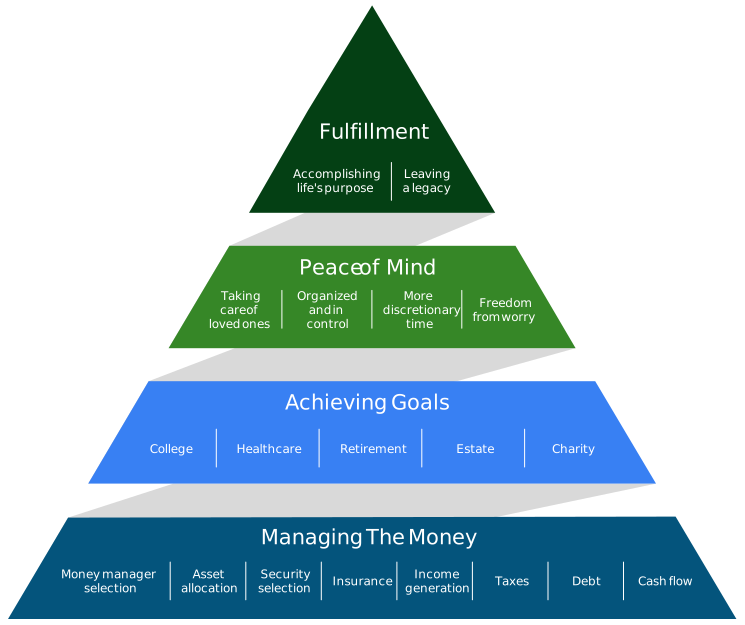
The Fidelity Advice Value Stack

After reflecting on how you can help clients across the Advice Value Stack, select questions from the lists below to spark new dialogue. These discussions can help you better understand what they care about, what keeps them up at night, and how they want to shape their future.

Use active listening to pick up on important cues, and prompt clients to elaborate (e.g., "Tell me more about that ..."). Find opportunities to ask spouses/partners these questions as well. These conversations may reveal new ways you can help clients and strengthen your relationships.

How can advisors do more to help clients manage their money?

Ask your clients these questions that get to the foundational level of financial advice—everything from asset allocation to insurance to cash flow:

  1. What emotions come up for you when you think about money or investing (e.g., stress, excitement, fear, confidence)?
  2. Is there anything that you wish you knew about money or investing earlier in life?
  3. When you think about investing, what’s most important to you (e.g., protecting what you have, growing your wealth)?
  4. How do you handle the ups and downs of the financial markets (e.g., stay the course, make changes)?
  5. How confident are you in your understanding of financial concepts like diversification, compounding, or inflation?
  6. Have you ever made a financial decision that you regretted?
  7. Do you have a clear picture of where your money goes, and does that align with your values (e.g., paying off debt, building generational wealth)?
  8. How do you typically make financial decisions (e.g., quickly, after research, with input from others)?
  9. How often do you check your financial accounts or review your investment performance?
  10. When you think about my role as your financial advisor, how do you envision me helping you? What can I do differently than other advisors you’ve had?
What do advisors need to know to help clients achieve their goals?

Use these questions to help clients set and reach goals in critical areas like retirement, college, and charitable planning:

  1. What are you hoping to achieve in the next one to three years?
  2. What personal goals outside of investing are you working towards?
  3. How do you feel about your current financial plan?
  4. Describe the vision for your life: five, ten, and fifteen years from now?
  5. What does being “wealthy” mean to you? What does “financial freedom” look like for you?
  6. Are there any upcoming life events (marriage, birth, etc.) or large purchases that would impact your financial plan?
  7. Are there any health-related items you’d like to prepare for financially?
  8. When do you hope to retire, and how will you plan to spend your time in retirement?
  9. What does your work mean to you? Do you envision it changing in the future?
  10. Do you currently give to charity, or is that something you’d like to do more of in the future?
How can advisors help clients gain peace of mind?

Find out the answers to these questions that will help your clients feel less anxious and more in control of their financial lives:

  1. What does “peace of mind” mean to you when it comes to your finances, your family, and your life?
  2. How have your life experiences impacted your view or approach to money?
  3. What worries you the most about money? About the future?
  4. What can you tell me about your family and your health that might impact your future plans?
  5. Do you have any concerns about how your finances or life may change as you age (e.g., caregiving, health care costs, outliving savings)?
  6. Who else should be brought into our conversations, or know more about your financial plans?
  7. How do your personal relationships support or challenge you in achieving financial peace of mind?
  8. Are there financial situations or decisions that tend to cause you stress or anxiety?
  9. What would make you feel more confident about your financial future?
  10. Are there any parts of your financial life that feel unclear, overwhelming, or require too much time?
What can advisors do to help clients become more fulfilled?

Use these questions to help clients clarify what fulfilling their life's purpose means to them and the legacy they'd like to leave:

  1. When you hear the word “fulfillment,” what do you think of? What does “fulfillment in life” mean to you?
  2. How have your life experiences impacted your view or approach to money?
  3. What do you want your legacy to be?
  4. Are there experiences you’ve always wanted to have, but haven’t had the time or money to do yet?
  5. What’s one change, big or small, that would make you feel more fulfilled today?
  6. Do you feel your current lifestyle reflects your values and goals? If not, what’s missing?
  7. If money wasn’t a concern, how would you spend your time?
  8. What would it look like to “live your best life”? When do you feel at your best?
  9. Who or what inspires you to live your best life?
  10. What are the values that guide your decisions—financial or otherwise?
Want ideas for your next client meeting?
Creating client conversations that count