You are on our wealth management services website for advisors & wealth managers.
Browse more Fidelity websites here.
As 2026 nears its midpoint, the stock market is high—and so is the economic uncertainty that has been with us for so long. But despite potential risks, Fidelity’s investment pros have found plenty of smart moves for investors to consider, whether investors are seeking growth, diversification, value, inflation-hedging potential, or more.
Here are 5 big investing ideas for the rest of the year.
Investors might be understandably weary of hearing about tech. AI headlines are everywhere, and the sector’s leadership has felt relentless. But stepping back, the case for not ignoring tech is straightforward: It’s been ground zero for earnings growth.
Technology posted the fastest earnings growth of any S&P 500® Index sector in the first quarter of 2026, alongside the strongest revenue growth. The sector has also seen profit margins rise, even as companies continue to invest aggressively. That combination of earnings growth, expanding margins, and continued investment helps explain why tech has remained a market leader despite periodic bouts of volatility.
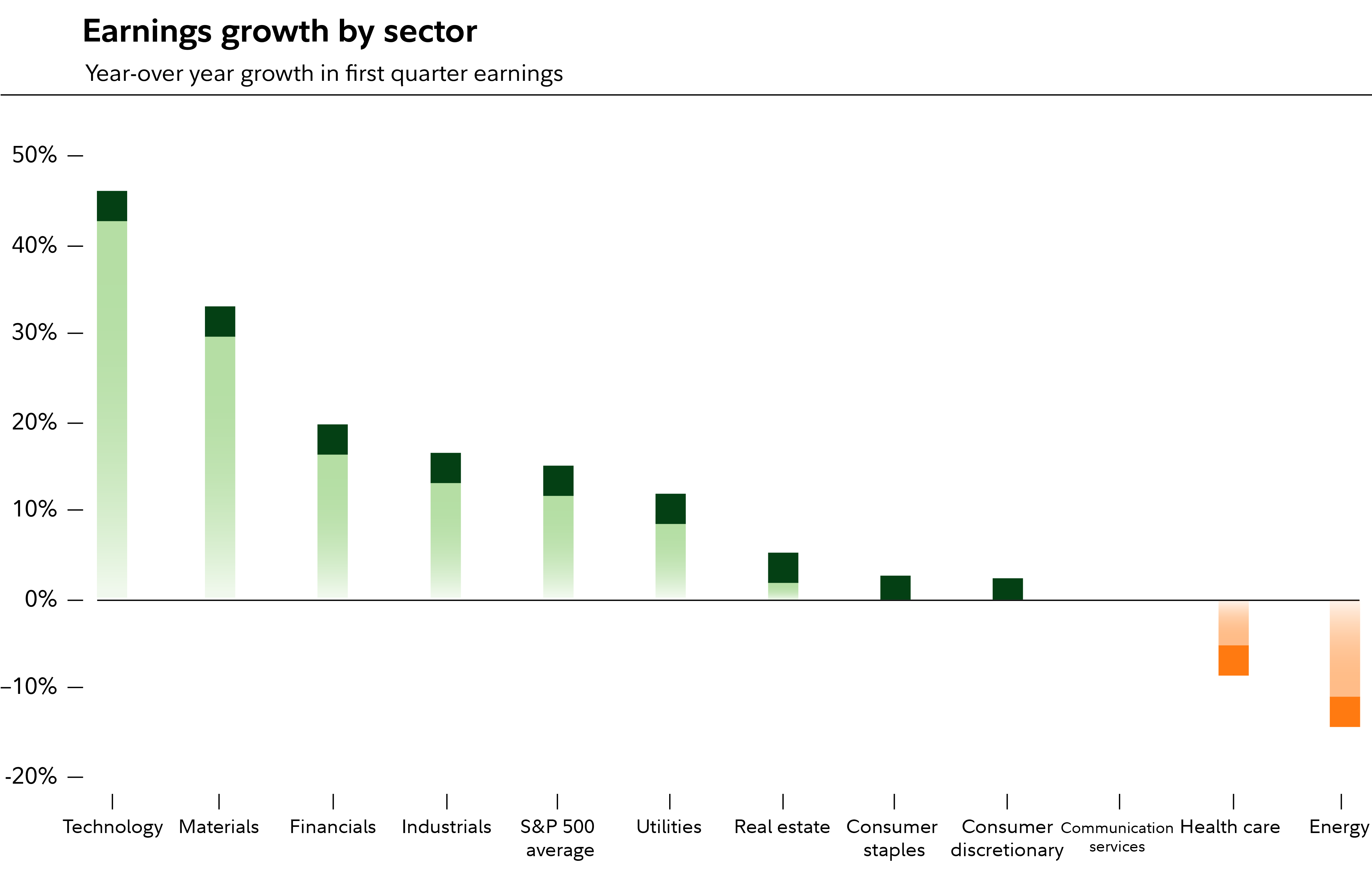
Source: FactSet, as of April 24, 2026. Year-over-year earnings growth based on blended earnings for first quarter 2026, which combines actual results for companies that have reported earnings with estimated results for companies that have yet to report. Each sector is represented by S&P 500 constituent companies that are classified as members of the respective GICS® sector.
Some investors may also be wary of valuations, or what might look like excessive enthusiasm for the sector. But as Fidelity Director of Quantitative Market Strategy Denise Chisholm has noted, elevated valuations among parts of the sector today look very different from past speculative episodes. Then, prices on risky tech stocks kept rising as earnings collapsed. Today, earnings have been reaccelerating.
Importantly, recent market action suggests growing differentiation rather than blind optimism. Performance has become more uneven across the sector, and valuations for even the largest technology companies remain well below the extremes of the dot‑com era.
None of this suggests tech will move in a straight line. But for investors focused on growth potential, technology remains difficult to replace.
After years of US leadership, international stocks have been reasserting their role as a powerful diversification tool. Both developed- and emerging-market stocks outperformed US stocks by a wide margin in 2025 and remain in positive territory so far in 2026 as of mid-May, with emerging markets pulling notably ahead.
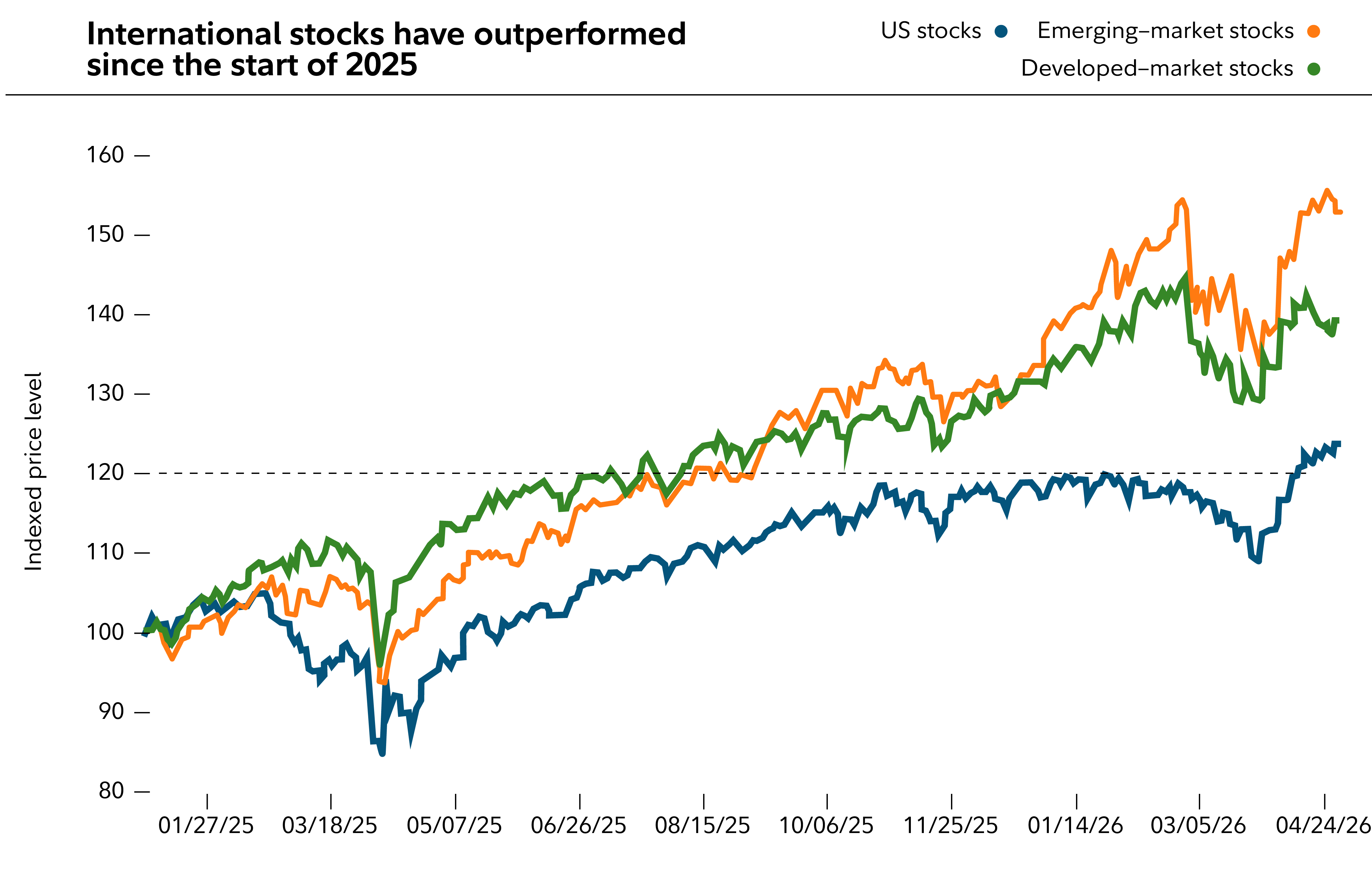
Past performance is no guarantee of future results. Based on price performance in US dollars. Change in price based on an index level of 100 as of January 2025. US stocks represented by the MSCI USA Index, which is designed to measure the performance of large- and mid-cap segments of the US market and covers approximately 85% of the free-float-adjusted market capitalization in the US. Emerging-market stocks represented by the MSCI Emerging Markets Index, which captures large- and mid-cap representation across 24 emerging markets countries and covers approximately 85% of the free-float-adjusted market capitalization in each country. Developed-market stocks represented by the MSCI EAFE Index, which captures large- and mid-cap representation across 21 developed-market countries around the world, excluding the US and Canada, and covers approximately 85% of the free-float-adjusted market capitalization in each country. Sources: Fidelity Investments, MSCI. Data as of April 30, 2026.
Even after that run, stock valuations abroad remain meaningfully lower than in the US. And in many economies, fundamentals have been improving—creating a more balanced setup than investors have seen in years.
Consider Europe, where long-running headwinds have been turning into tailwinds. Led by Germany, several European governments have been ramping up investment in defense, energy security, and infrastructure. A comprehensive investment package passed in Germany “marks the most significant fiscal spending package since German reunification,” says Faris Rahman, manager of Fidelity® Europe Fund (FIEUX). Meanwhile, in Japan, major corporate governance reforms have been fueling a renaissance in shareholder value creation. And after nearly 3 years of sluggish global manufacturing activity, a broadening number of countries have been reporting improving manufacturing conditions—suggesting that a tentative turnaround in global industrial activity may be taking shape.
For investors who have allowed their portfolios to become overly US-centric, the strong international performance of the last year and a half should be a wake-up call. Beyond returns potential, exposure to different economic cycles, currencies, and sector leadership patterns can help smooth investors’ ride—and expand the opportunity set—in an increasingly multipolar world.
The US inflation rate has remained above 2% for more than 5 years straight. Now, a fresh wave of inflationary pressures related to the Middle East conflict is percolating through the economy—recently pushing headline inflation measures to their hottest levels in several years.
Stocks are often investors’ strongest first line of defense against inflation, thanks to their long-term growth potential and companies’ ability to pass along higher costs. But for investors seeking additional inflation-hedging potential, a modest allocation to precious metals may be worth revisiting.
Beyond near-term inflation concerns, several durable forces have been supporting significant gains in gold and silver prices in recent years: demand from global central banks, a more fragmented geopolitical landscape, concerns about global deficit spending, and strong industrial demand for certain metals.
That said, precious metals are an inherently volatile asset class, so any dedicated allocation to precious metals should be approached thoughtfully. There are 3 main different ways of gaining exposure to the asset class, each of which can come with unique risk/reward characteristics.
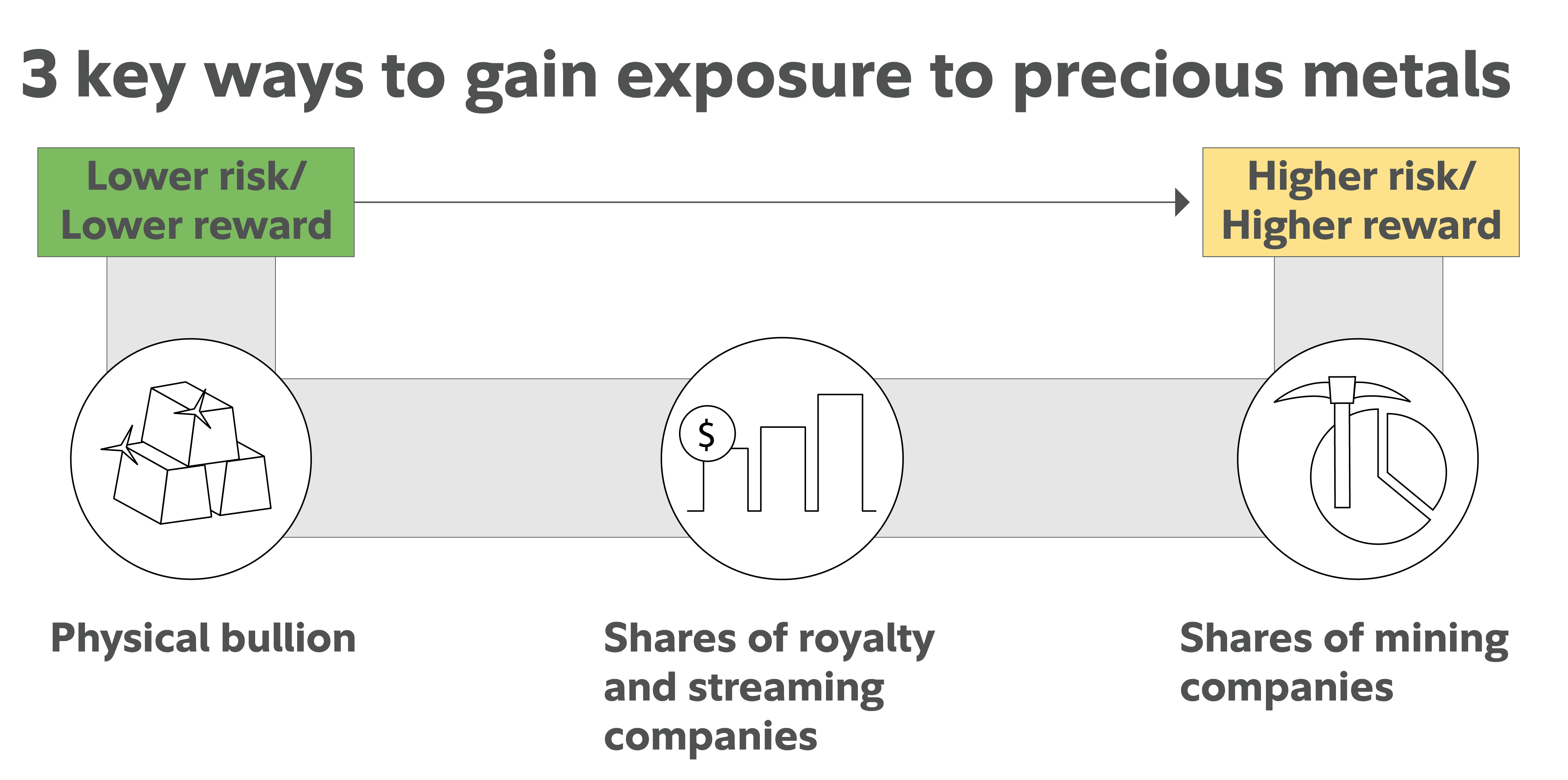
Royalty and streaming companies provide upfront financing to miners in exchange for a percentage of future revenue (royalties) or the right to purchase a portion of future production at predetermined prices (streams). “Streaming” in this context refers to contractual rights to acquire future metal production, not digital media streaming. For illustrative purposes only. Source: Fidelity.
Convertible bonds sit between stocks and traditional bonds—and recently, that middle ground has looked like a sweet spot. They pay interest like a bond, but can be converted into shares of the issuing company's stock. If stocks struggle, convertibles often behave more like bonds, with the bond’s value helping limit price declines. But if stocks rally, they can convert into stock and enjoy unlimited upside potential.
Adam Kramer, lead manager of the Fidelity® Multi-Asset Income Fund (FMSDX) and comanager of Fidelity® Convertible Securities Fund (FCVSX), has been calling this the “golden age” of convertible bonds, due to how favorable market dynamics have been recently. The asset class posted stock-market-beating returns in 2025;1 new issuers are entering the market; and roughly one third of the convertible market is set to mature over the next few years, creating the potential for pent-up demand that could provide a tailwind for prices. Recent themes Kramer’s team has been able to play in the convertibles market have included the AI-related infrastructure buildout and company-specific turnaround stories.
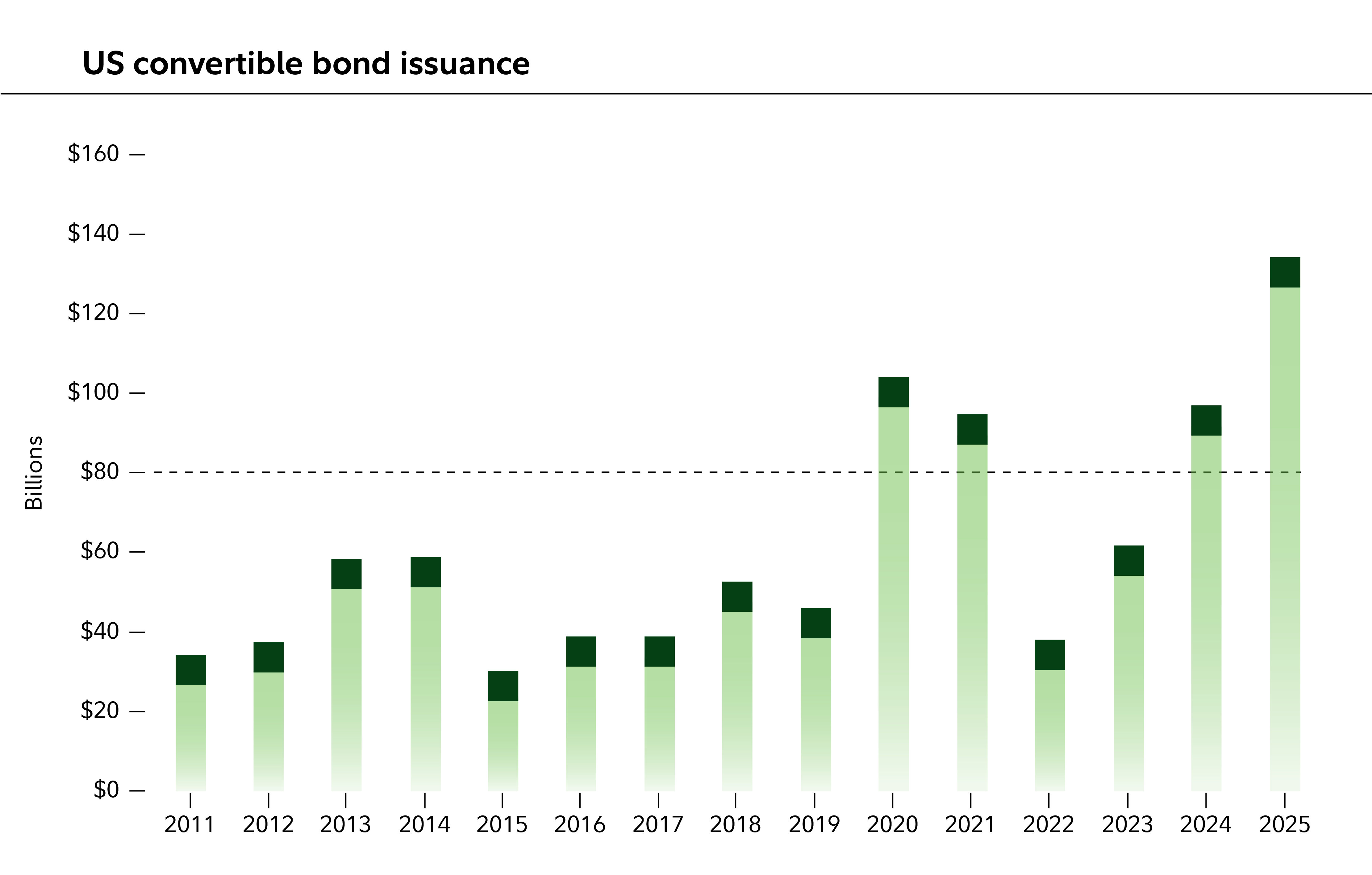
Sources: Securities Industry and Financial Markets Association (SIFMA), Thomson Reuters, Fidelity. Data as of December 1, 2025.
Health care has been one of the most out-of-favor sectors for years.
After a surge of enthusiasm during the pandemic, when optimism about vaccines was running high, the sector has been buffeted by headwinds. Those have included concerns about major drug patent expirations, a shake-out in parts of the biotech segment, and a pullback in funding for early-stage companies.
The upside, says Eddie Yoon, manager of Fidelity® Select Health Care Portfolio (FSPHX), is that the reset has left sector valuations hovering near their lowest levels in 35 years.
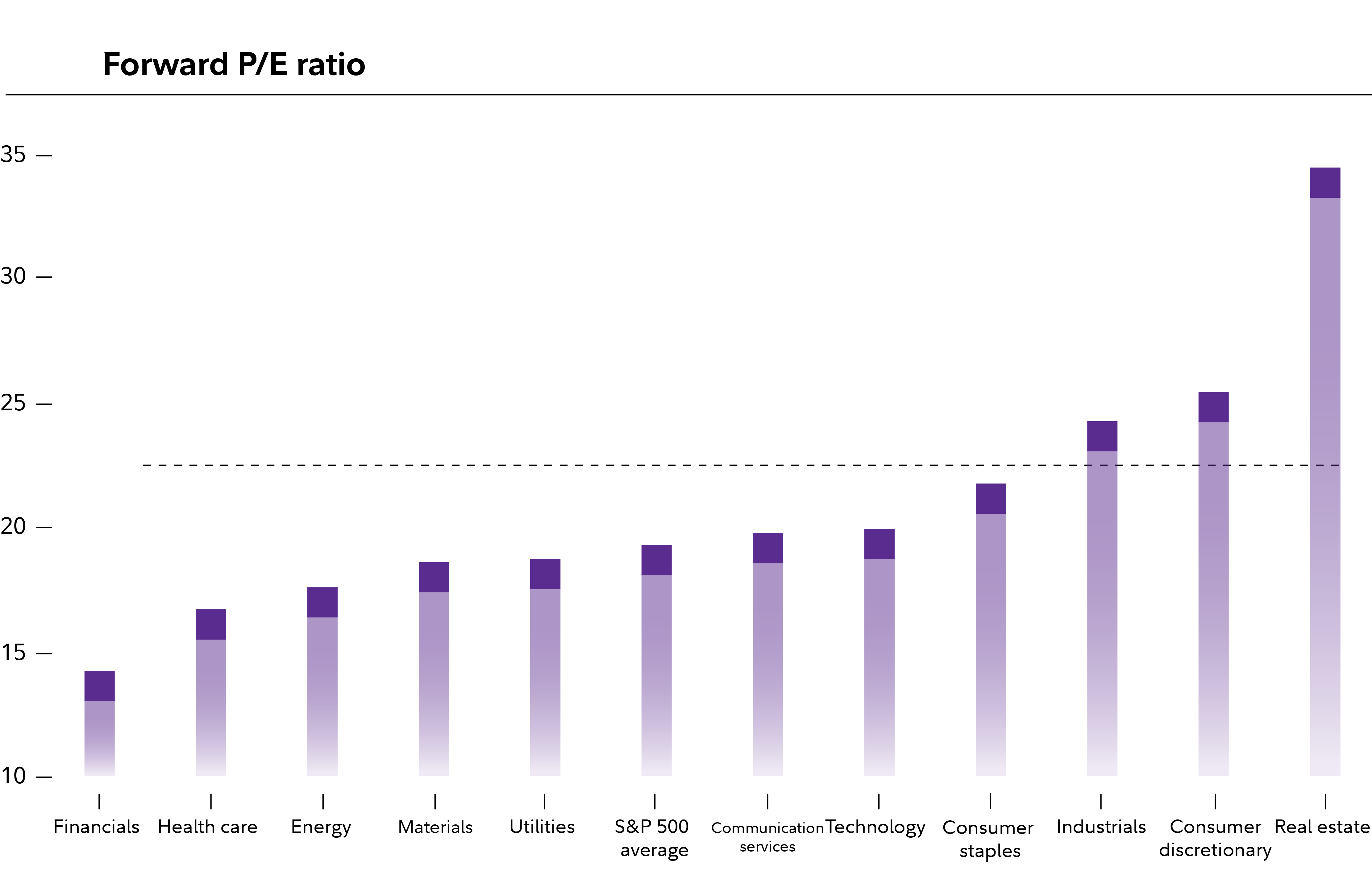
Forward price-earnings ratio is price divided by analyst consensus earnings estimates for the following 12-month period. Each sector is represented by S&P 500 constituent companies that are classified as members of the respective GICS® sector. Source: S&P. Data as of April 30, 2026.
Importantly, the health care sector includes more than just large pharmaceutical companies. It spans biotech innovators, medical device makers, diagnostics firms, health insurers, and more—many working on therapies and technologies that address serious and often underserved medical needs. While investors may fixate on the most headline-worthy themes, such as GLP-1 drugs, Yoon sees signs of “green shoots” emerging across the sector, including improving fundamentals, better funding activity, and positive clinical-trial data.
Health care is also one of the market’s most inefficient sectors, with wide gaps between strong and weak businesses. Yoon and the team he leads focus on bottom-up research, targeting companies that are highly innovative while also managing their businesses effectively. In a market that has gone through a period of AI-focused tunnel vision, health care’s breadth may offer value opportunities where fewer investors have been looking.
Get ready to manage your client portfolios—and relationships—more effectively with Fidelity's powerful portfolio construction insights, tools, and solutions.
Learn more
Help align your clients' portfolios with their interests with our thematic investing options.
Learn more
Offer a more tailored experience to your clients with our custom SMAs' personalization capabilities, investment and tax management expertise, and client-focused service model.
Learn more